What does independence really mean on public and private boards?

Hypatia Kingsley 29 Oct 2025

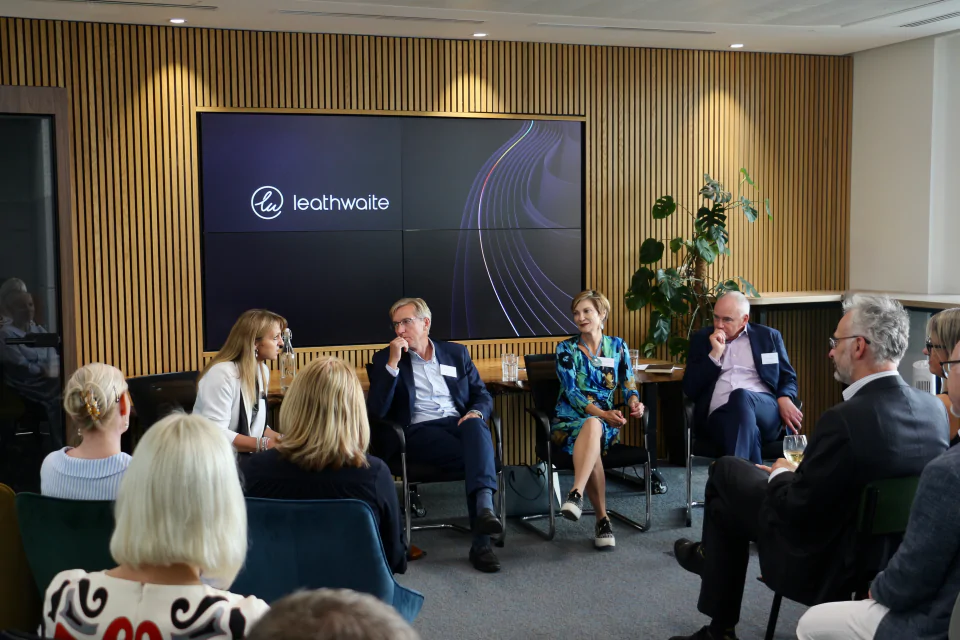
image from our latest boardtalk event - panellists speaking to an audience
Insights from our inaugural New York Board event


In today’s governance landscape, the concept of board independence is anything but static. At Leathwaite’s recent BoardTalk panel, four seasoned directors – Kerry Chandler, Larry Klane, Rachel Lam, and Sigal Zarmi, joined us and a stellar audience to discuss how independence is defined, exercised, and challenged across public and private boards. What emerged was a candid, nuanced and spirited conversation that revealed independence in governance as not just a regulatory construct but an evolving and personal practice for board directors.

Independence: a shifting definition


We began by grounding our discussion in regulatory frameworks. As the SEC and stock exchanges define it, independence generally hinges on the absence of material relationships that could compromise a director’s judgment. But as Harvard Law’s Forum on Corporate Governance reminds us, “Independence is neither a fixed condition nor a universal status for all purposes.”  Changing motives, events and relationships mean that independence is situational and evolves over time.

In private companies, the concept of independence can be even murkier; investors and founders/owners may also not know how to utilize independent directors effectively. An independent director may find themselves playing a singular role vs a plurality of independent directors, as is the case in public companies. Often, these directors serve as advisors with fewer formal requirements and more ambiguity in their roles.  Rachel Lam shared, “the sole independent director truly is supposed to be the independent voice with no conflict of interest.  Sometimes they may have to be the standalone vote to pass things… It’s a very different role than on a public board.” ​

image from our latest boardtalk event - panellists speaking to an audience
Constraints and latitude


The panel explored where directors feel most constrained and where they find room to stretch. Larry Klane observed that public boards often operate under a culture of unanimity: “You don’t see a lot of votes that aren’t unanimous, and while it doesn’t mean you can’t share a different perspective, consensus and collaboration impacts how you speak.”

In contrast, private boards, especially those backed by aggressive investors can engender more debate: “Investors are smart, direct and the nature of the conversation is deeply more combative in a loving way,” Klane added.

Yet constraints aren’t always external. Kerry Chandler reflected on the importance of showing up as a director with confidence: “How you start out of the gate makes a big difference. You can’t be shy initially and then expect to find your voice later.”

 Culture and collaboration


Board culture emerged as a critical factor for the panel in enabling independence, with the importance of cultural fit, mutual respect and values alignment all impacting how directors contribute most effectively. Sometimes a single change in directors can shift the dynamic of a board, and Chandler emphasized the value of building relationships outside the boardroom: “I attend meetings in person, join committees, and make time for informal conversations. That’s where trust is built.” Sigal Zarmi added, “Influence skills pay a huge dividend. You may not be the decision-maker, but how you contribute to the discussion and persuade others matters enormously.”

Expertise as a lens for independence


The panel also offered insight into their individual value propositions for board service, and how their expertise contributes to their role as independent directors. For Lam, the superpower is finance: “I spend hours reviewing board materials with a particular focus on making sure that I agree with audit, finance and any M&A/capital transaction recommendations, or if not, what questions I need to ask.” Chandler noted her human resources experience has aligned well with expectations in the boardroom – “influence is one of the biggest skillsets needed as a CHRO so exercising that muscle as a board member has felt natural.”

For her part, Zarmi cautioned against over-indexing on one area: “While expertise is important, you can’t abdicate responsibility for everything else. You’re on the board because you bring all of your experience, not just your superpower.” Klane, a former CEO, shared how his experience managing boards informs his approach: “It’s easy for ex-CEOs to confuse the role of management with the role of the board. I’ve learned to bring all of myself, but not overstep.”

Image of guests at the New York Board event
Advice for aspiring Independent Directors


Our panel emphasized that independence is an ongoing journey, not a destination, and thoughtful engagement and continuous learning are critical touchstones for aspiring directors. Some last words of practical advice for executives considering their first independent directorship?

“Get exposure to your current board at your company – present to them on relevant topics, observe, learn.”

– Chandler

“Network, network, network.”

– Zarmi

“Ask yourself why you want to be on the board. It’s not just a career step – it’s a responsibility.”

– Lam

“Be gracious with yourself. The process is not straightforward, and rejection is part of it.”

– Klane

About us


Leadership is the cornerstone of success for any organization; Leathwaite has the expertise and structure to identify and appoint rare and exceptional, board-level talent who possess the vision, skills, and agility needed to drive innovation, engagement and sustainable growth.

With access to one of the most extensive global networks of senior corporate officer talent, we understand the need to diversify the make-up of boards and work with our clients to invoke meaningful change and transformation.

We deliver executive search mandates for both permanent and interim roles, provide independent board assessments, market mapping, salary benchmarking and succession planning strategies to identify high potential talent with a growth mindset, giving access to the next-generation of leaders.

For more information or if you’d like to attend our next event, please contact, Hypatia Kingsley.

Hypatia Kingsley

Hypatia Kingsley

Hypatia Kingsley is Partner and Head of the Americas. She drives business growth and leads a team of leadership consultants across various industries. With over 25 years of advisory experience, Hypatia specializes in fintech, financial services, and social enterprises, focusing…

See full profile